Ingredient check
What Is Glyco Mode Lysine Doing in the Blend?
Glyco Mode lysine is listed first under the blend, which makes it the largest share by weight. It is also the ingredient with the least obvious link to a blood health bottle. This page looks at why.
Glyco Mode lysine is printed as L-Lysine HCL, an essential amino acid, first in the blend and so the largest share. Its amount is not published. Studies use 1 to 3 g a day, mostly for cold sores, which is as much as the whole 1000 mg blend or more. Nothing on the label explains why it is there.
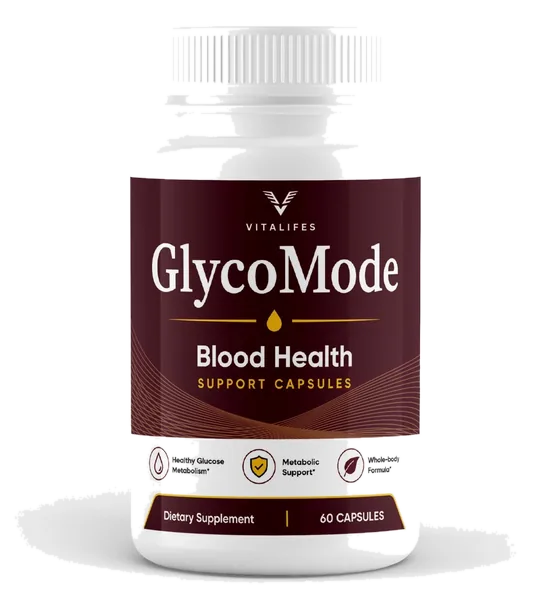
Want to see the live price?
If you decide to check it for yourself, the checkout shows the live price and the return terms. Read both before you pay.
Glycomodes is not the manufacturer. We earn a commission when you buy through the checkout link on this site. It never changes the price you pay.
Read this first
This page is general information, not medical advice. GlycoMode is a dietary supplement. It is not FDA approved, and no supplement is. It is not intended to diagnose, treat, cure or prevent any disease. Ask your own doctor before you use it, and say so if you take insulin or any diabetes medicine.
Key facts
- Label name: L-Lysine HCL, an essential amino acid, first of nine names in the blend.
- First means the largest share by weight, but the amount is not published.
- Supplement trials use 1 to 3 g a day, mostly for cold sores.
- The low end of that range equals the whole 1000 mg blend.
- We found no NIH, NCCIH or Memorial Sloan Kettering page on lysine to cite, so this ingredient has no citation on the site.
- The label gives no reason for its presence in a blood health product.
What is Glyco Mode lysine?
Lysine is an essential amino acid. The body cannot make it. It comes from protein in food. The label prints it as L-Lysine HCL, a hydrochloride form.
It is the first name under the Test Boost Proprietary Blend. That position matters. US rules ask a blend to list ingredients in descending order of weight, so lysine is the largest share and raspberry ketones, listed last, the smallest.
That order is the one quantitative fact on the panel. It tells you the rank. It does not tell you the amount.
How big could the Glyco Mode lysine share be?
Nobody can say. One ingredient could be 900 mg and the other eight a dusting, and the label would look exactly the same. Equally, lysine could be well under half.
| Question | Answer |
|---|---|
| Where does lysine rank? | First, so the largest share |
| How much is it? | Not published |
| Average share if the blend split evenly | about 111 mg |
| Lowest share possible for the first name | at least the average, since it is the largest |
| Studied range for lysine | 1 to 3 g a day |
Here is a small piece of logic. Because lysine is first, its share cannot be below the average of about 111 mg. It could be far above. That is all the panel lets us conclude.
What is lysine usually studied for?
Supplement trials on lysine use 1 to 3 g a day, mostly for cold sores. They do not study it for blood sugar or glucose metabolism.
The low end of that range, 1 g, equals the entire blend. The high end is three times the blend. So lysine cannot be at a trial level here without taking up most or all of the capsule.
This is a statement about weights. It is not a claim that the capsule is empty of lysine. It says you should not borrow a trial result for a cold sore and apply it to this bottle.
Why is there no citation for Glyco Mode lysine?
This site cites three kinds of source for ingredients: the NIH supplement office, the NIH complementary health centre and a cancer centre's herb monographs. We looked for a lysine page in each and found none we could link.
We chose to leave the line empty rather than use a retailer or a content farm. That is a choice, and we think it is the right one. The absence tells you something: there is no easy plain-language reference to point to.
The one fact that holds comes from the ingredient itself. If you eat protein, you already get lysine. Most supplement research on it is about cold sores, not blood sugar.
What are the safety points for Glyco Mode lysine?
We have no specific warning from the sources we use. That is not the same as a clean bill. Without a reference page, without an amount, and without a trial on the finished formula, the honest position is: not established.
- The label caution still applies: do not exceed the recommended dose.
- Pregnant or nursing mothers, children under 18 and anyone with a known medical condition should consult a physician first.
- Take the bottle to a pharmacist and read out all nine names, including L-lysine.
Other names in the blend carry named cautions of their own. They are covered on the safety page.
Does lysine change what the product is for?
Only in the sense that it is a clue about how the blend was built. A blood health product might be expected to lead with a blood sugar ingredient. This one leads with an amino acid studied for cold sores.
We do not assume a reason. The seller has published none. Our post on proprietary blends explains why a blend lets a maker avoid that conversation, and what questions to ask.
Where do these facts come from?
Label, seal and seller facts come from the printed bottle and the pages of this site. Ingredient safety facts follow the sources below.
Frequently asked questions
How much lysine is in Glyco Mode?
Not published. It is first on the list, so it is the largest share of the 1000 mg blend, but the weight is not printed.
What is L-lysine HCL?
An essential amino acid in a hydrochloride form. The body takes it from protein in food.
Does lysine lower blood sugar?
Most supplement research on lysine is about cold sores, not blood sugar. The label gives no reason for its presence.
Why is there no source cited for lysine?
We found no page on it from the NIH offices or the cancer centre monographs this site uses, so we left the citation empty.
Is lysine safe?
No specific warning was found in the sources we use, but the amount is not published and no trial exists on the finished formula. Follow the label caution and ask a clinician if you are unsure.
Can I get lysine from food?
Yes. It is an essential amino acid that comes from protein in food.
Our view
Glyco Mode lysine is the first name on the panel and the one we can least explain. It is likely the biggest single share, yet nothing on the label says what it is for.
The clean reading is the simple one. It is an amino acid. It is studied at gram doses for cold sores. It is not a blood sugar ingredient.
If you are weighing the product, count lysine as a reason to ask the maker one direct question about the blend. Until there is an answer, treat it as unexplained.
GlycoMode is a dietary supplement. It is not FDA approved, and no supplement is. It is not a treatment for diabetes, and nothing here is a reason to change or stop a medicine. Ask your own doctor or pharmacist before you start, and take the bottle with you.
Want to see the live price?
Whatever you choose, look at the return terms on the checkout screen first. They are the only terms that govern your order.
Glycomodes is not the manufacturer. We earn a commission when you buy through the checkout link on this site. It never changes the price you pay.
Last updated . Written by the GlycoMode Editorial Desk. Medically reviewed by Dr. Andrea Hayes, MD, Physician.